
EMDR Therapy in Orange County
Trauma-focused therapy with EMDR-trained clinicians at our Irvine, Huntington Beach and Orange offices, in network with most major plans.
Some memories stay vivid and upsetting long after the event is over. They show up as flashbacks, nightmares, a racing heart in certain places, or a belief like "I'm not safe" that logic alone can't shift. EMDR (eye movement desensitization and reprocessing) is a structured therapy that helps the brain reprocess those memories so they lose their emotional charge. Orange County Health Psychologists offers EMDR therapy in Orange County at our Irvine, Huntington Beach and Orange offices, with more than ten EMDR-trained clinicians. This guide explains how EMDR works, what the research says, what happens in each of the eight phases and how to get started.
What is EMDR therapy?
EMDR is a form of psychotherapy developed in the late 1980s for traumatic memories. During part of each session, you briefly focus on a difficult memory while paying attention to a back-and-forth stimulus, such as eye movements following the therapist's hand or a moving light, alternating taps, or tones played in each ear. This bilateral stimulation is thought to help the brain process the memory the way it processes ordinary experiences, so that it can be remembered without the same distress.
As the memory loses its intensity, the beliefs attached to it often change as well. "It was my fault" can become "I did the best I could," and "I'm in danger" can become "It's over, and I'm safe now."
EMDR differs from traditional talk therapy in a few practical ways:
- You don't have to describe every detail of what happened out loud
- There is no homework between sessions
- Sessions follow a set structure, so you always know what comes next
- The focus is on how the memory is stored now, not only on talking about the past
Does EMDR work?
EMDR is one of the most studied trauma treatments, and major health organizations include it in their guidance for post-traumatic stress disorder:
| Organization | What it says about EMDR for PTSD |
|---|---|
| U.S. Department of Veterans Affairs and Department of Defense (2023) | Strong recommendation for individual, manualized trauma-focused therapies, naming EMDR alongside cognitive processing therapy and prolonged exposure |
| American Psychological Association (2017) | Conditional recommendation; typically delivered once or twice a week for 6–12 sessions |
| World Health Organization (2013) | Lists EMDR and trauma-focused CBT as the psychotherapies to consider for adults and children with PTSD |
Research is strongest for PTSD. Clinicians also use EMDR for other distressing experiences, such as complicated grief, medical trauma and memories that keep anxiety or stress going, and our Services page lists eating disorders and addiction as areas where EMDR can be part of care. Your therapist will talk with you about whether EMDR is the right fit or whether another approach, or a combination, would serve you better.
How does EMDR compare with other trauma therapies?
EMDR is one of several evidence-based options. Knowing the differences can help you choose.
| Therapy | How it works | What you do between sessions | Typical length |
|---|---|---|---|
| EMDR | Reprocesses memories using bilateral stimulation; detailed retelling isn't required | No homework | 60–90 minute sessions; about 3–6 for a single event, 8–12+ for complex trauma |
| Cognitive processing therapy (CPT) | Examines and changes beliefs about the trauma, such as blame and safety | Written worksheets | About 12 weekly sessions (APA) |
| Prolonged exposure (PE) | Gradual, repeated approach to the memory and to avoided situations | Listening to session recordings and practicing exposures | About 8–15 sessions of 90 minutes (APA) |
| Trauma-focused CBT | Skills, gradual processing of the trauma and caregiver involvement | Skills practice | Commonly used with children and teens |
Many OCHP clinicians are trained in more than one of these approaches and can combine them. See cognitive behavioral therapy.
What happens in EMDR? The 8 phases
EMDR follows eight phases described by the EMDR International Association. You won't necessarily complete one phase per session, and early phases can take longer when building stability comes first.
- History and treatment planning. Your therapist learns about your history, current symptoms and goals, and identifies the memories and present-day triggers to work on.
- Preparation. You learn how EMDR works and practice calming techniques, such as a "calm place" exercise, that you can use during and between sessions.
- Assessment. You identify a target memory, the image that represents it, a negative belief about yourself, the belief you'd rather hold, and the emotions and body sensations that come with it. You rate how distressing it feels on a 0–10 scale.
- Desensitization. You hold the memory in mind during short sets of bilateral stimulation, noticing whatever comes up, until the distress rating comes down.
- Installation. You strengthen the positive belief until it feels true.
- Body scan. You notice any remaining tension in your body and process it.
- Closure. Each session ends with you feeling settled, even when work on a memory isn't finished.
- Reevaluation. At the next session, you and your therapist check progress and decide what to work on next.

What can EMDR help with?
At Orange County Health Psychologists, clinicians use EMDR most often for the concerns below. It can also be part of care for relational and childhood trauma, eating disorders and addiction, and it can be combined with virtual reality therapy, which pairs guided VR environments with exposure, CBT and EMDR.
Trauma and PTSD
Accidents, assault, abuse, combat and medical trauma, including complex PTSD after long-standing or childhood trauma.
Read moreComplicated grief
When memories of a loss feel stuck or intrusive, EMDR can help them settle so grieving can move forward.
Read moreAnxiety and panic
Anxiety and panic tied to specific past experiences, such as a frightening event that keeps setting off alarm in similar situations.
Read moreDifficult births
Frightening or traumatic births, NICU stays and other perinatal experiences that keep replaying.
Read moreTeens and young adults
EMDR can be adapted for younger clients, and several of our EMDR clinicians focus on teens and young adults.
Read moreEMDR alongside CBT
Many clinicians combine EMDR with cognitive behavioral therapy, using CBT skills for current stress and EMDR for the memories underneath.
Read moreWhat does EMDR feel like, and are there side effects?
Many people describe EMDR sessions as tiring but manageable. During reprocessing, you may notice strong emotions, new memories or body sensations, which are part of the process. Cleveland Clinic notes that some people have vivid dreams or feel more emotional for a few days after a session. These effects usually ease as therapy progresses, and your therapist will make sure you have tools to manage them.
EMDR may not be the right first step if you're in an active crisis, have unmanaged substance use, or don't yet have ways to calm yourself when emotions run high. In those situations, your therapist will focus on stabilization first, which is part of phase 2.
Who provides EMDR at OCHP?
EMDR requires specialized training beyond a clinical license. More than ten OCHP clinicians list EMDR as a specialty, across three offices.
Clinicians who offer EMDR

Dr. Sharon Ng, Ph.D.
Clinical Psychologist, Irvine
EMDR, CBT and ACT; English, Cantonese and Mandarin
View profile
Carlee Casey, LMFT, PMH-C
Licensed Marriage and Family Therapist, Irvine
EMDR for trauma; women's health and perinatal mental health
View profile
Dr. Kristin Kleppe, PsyD
Clinical Psychologist and founder of OCHP, Irvine
anxiety, PTSD and OCD
View profile
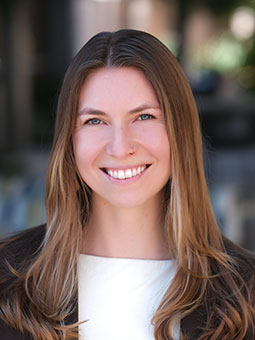
Kara Cress, LMFT
Licensed Marriage and Family Therapist, Huntington Beach
EMDR, trauma, grief and emotional regulation
View profile
Meghan Alvarez, LMFT
Licensed Marriage and Family Therapist, Huntington Beach
EMDR and trauma for teens and young adults
View profile
Jonathan Lee, LCSW
Licensed Clinical Social Worker, Orange
EMDR, trauma-informed CBT and ERP for OCD
View profileWhere we offer EMDR
EMDR is not offered at our San Francisco office. See therapy in Irvine, Huntington Beach and Orange.
Does insurance cover EMDR?
EMDR is a form of psychotherapy and is usually billed like other therapy sessions, so many plans cover it under outpatient mental health benefits. Most of our providers are in network with:
- Aetna
- Hoag Physician Partners / Hoag Medical Group
- Kaiser
- Medicare
- Optum/UHC
If you have a PPO plan that isn't listed, we can submit claims on your behalf. To see your likely out-of-pocket cost, use the cost estimator on our Insurance & Fees page or call 949-528-6300.
Patient essentials
Phone
949-528-6300
info@ochealthpsych.com
Hours
Weekdays 9am–5pm · Weekends 9am–1pm
Where
Irvine, Huntington Beach and Orange offices; not offered in San Francisco
How to start
Call, email or schedule online; our staff match you with an EMDR-trained clinician; intake forms; first session
Session length
Usually 60–90 minutes
Insurance
Most providers in network with Aetna, Hoag, Kaiser, Medicare and Optum/UHC; claims submitted for other PPO plans
Payment
Card, check, cash
In a crisis
We are not an emergency service. Call or text 988, or call 911
Frequently asked questions
What is EMDR therapy used for?
EMDR is used mainly for trauma and post-traumatic stress disorder. Clinicians also use it for distressing memories connected to complicated grief, anxiety, medical experiences and difficult births. At Orange County Health Psychologists, your clinician will help you decide whether EMDR fits your goals.
How many EMDR sessions will I need?
It depends on what you're working on. Sessions usually last 60–90 minutes. A single traumatic event may take about 3–6 sessions, while complex or long-standing trauma often needs 8–12 sessions or more. Early sessions focus on history and preparation before reprocessing begins.
Is EMDR better than talk therapy?
EMDR is a structured, trauma-focused therapy rather than open-ended talk therapy. The VA and Department of Defense strongly recommend trauma-focused therapies such as EMDR, cognitive processing therapy and prolonged exposure for PTSD. The best fit depends on your history, goals and preferences.
Do I have to talk about my trauma in detail?
No. EMDR doesn't require you to describe every detail of a memory out loud. You hold it in mind while your therapist guides the sets of bilateral stimulation, and you share only what you choose.
Where can I get EMDR in Orange County?
Orange County Health Psychologists offers EMDR at its offices in Irvine (15635 Alton Parkway), Huntington Beach (7777 Center Ave) and Orange (500 N. State College Blvd). EMDR isn't offered at the San Francisco office.
Is EMDR covered by insurance?
EMDR is usually billed like other therapy sessions. Most Orange County Health Psychologists providers are in network with Aetna, Hoag, Kaiser, Medicare and Optum/UHC, and we submit claims for other PPO plans. Call 949-528-6300 to check your benefits.
Can children and teens have EMDR?
Yes. EMDR can be adapted for younger clients, and several OCHP clinicians who offer EMDR work with teens and young adults. Our staff will match your child with a clinician who has experience with their age group.
Start EMDR with a trained clinician
You don't have to keep carrying the weight of painful memories on your own. Our team will match you with an EMDR-trained clinician at the office closest to you and check your insurance before you start. Call 949-528-6300 or schedule a consultation to begin EMDR therapy in Orange County with Orange County Health Psychologists.
Sources
Clinically reviewed by [Name, credential, CA license #] · Last reviewed [date]. This page is for general information and is not a substitute for professional diagnosis or treatment. If you are in crisis, call or text 988.

